A house that entertains well is not simply a large house. Anyone who has hosted in a spacious but poorly planned home knows the difference: the bottleneck at the door, the room that empties because there is nowhere to stand, the host trapped in the kitchen while the evening unfolds without them.
The homes that make hosting look effortless solved those problems years earlier – at the drawing board. An arrival sequence that absorbs guests gracefully. Rooms that allow people to circulate without instruction. A terrace that behaves like a room rather than a ledge. A service side that stays invisible.
Abu Dhabi hosts generously and often, and the homes here should be designed for that reality. This is what effortless entertaining looks like when it is built into the plan.
Hospitality Begins Before the Door
Guests form an impression of the evening before they cross the threshold, and most of it comes down to logistics rather than décor.
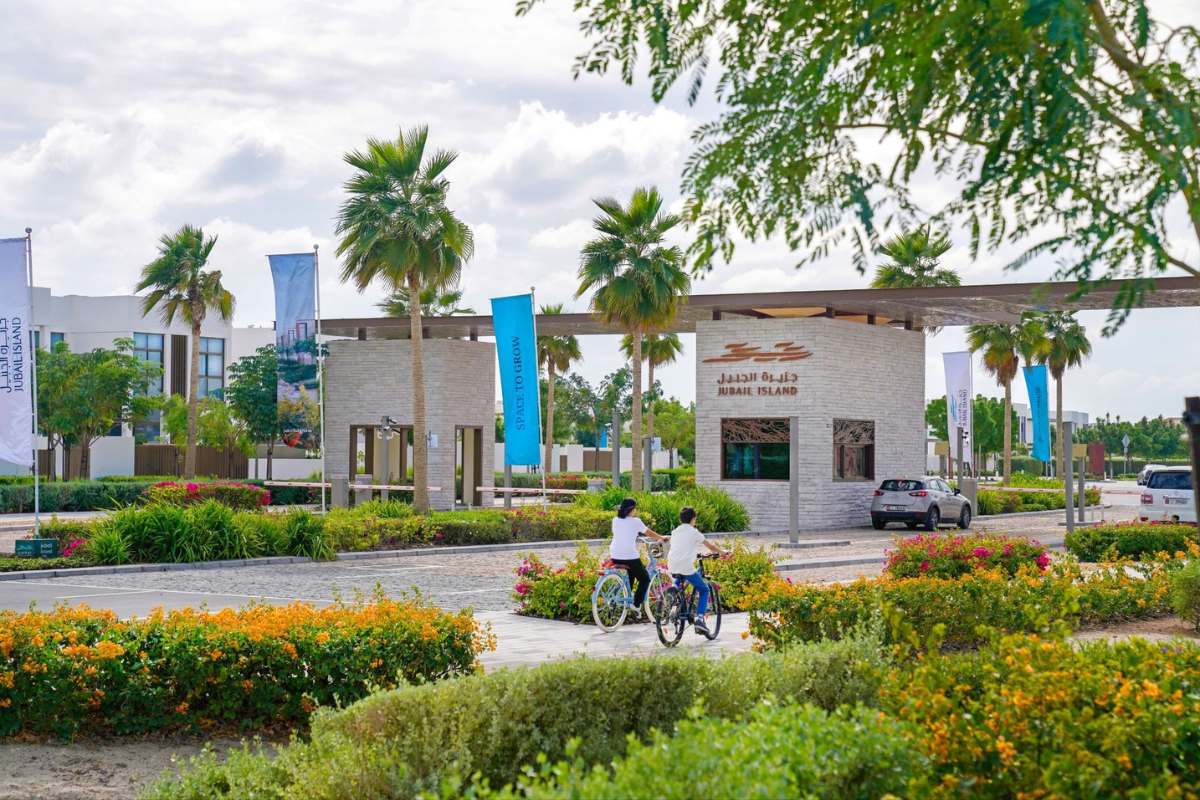
A driveway with real capacity means arriving cars are received rather than circling the street. A covered threshold matters more than it sounds in the warmer months, when the walk from car to door is the least comfortable thirty seconds of the night. And an entrance hall with genuine height does something no furnishing can: it gives everyone somewhere to stand while coats, greetings, and first impressions settle.
Get this wrong and the evening begins with friction – the crowded hallway, the guest still parking. Get it right and nobody notices, which is the point.
The Geometry of a Good Evening
Guests at a good gathering move constantly: welcome drinks, two or three conversation clusters, then the table, then back out again. Houses that host well are shaped for that movement, and the requirements are easy to name and hard to design.
- A circuit rather than a corridor. Principal rooms connected in a loop let people keep moving instead of doubling back through the same doorway.
- Rooms with more than one centre. A living space with floor-to-ceiling windows, a relaxed seating area and direct terrace access can support different moments at once, without ever feeling crowded.
- A sightline from the entrance. A glimpse of the garden or the water draws people through the house instead of leaving them clustered near the door.
- Doorways wide enough for two people to pass. Nobody notices this. Everybody feels it.
Open plan layouts with tall glazing suit this naturally, which is why they have become the standard for the island’s villas.
The Terrace: The Second Living Room
From autumn through spring the best room in an Abu Dhabi house has no ceiling, and a well designed terrace turns those months into the whole hosting calendar.
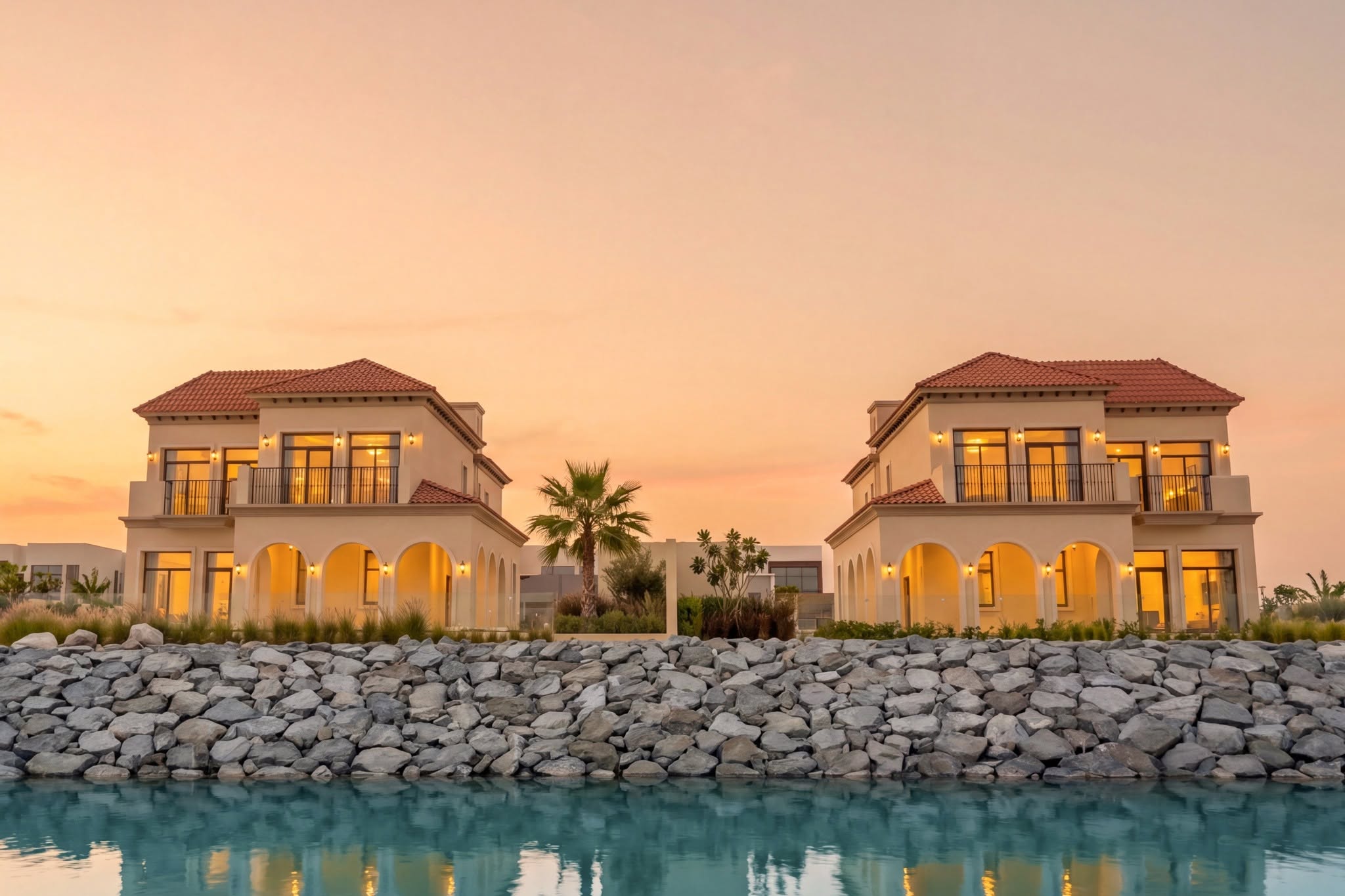
What separates an outdoor room from a balcony is depth. There has to be space for a full dining table and a separate lounge setting without the two arrangements negotiating. Beyond that: shade for the early evening and open sky for later, lighting kept low and warm rather than bright and overhead, and wide sliding doors that let the terrace and the interior read as one space. That last detail is the one that decides whether guests drift outside or stay put.
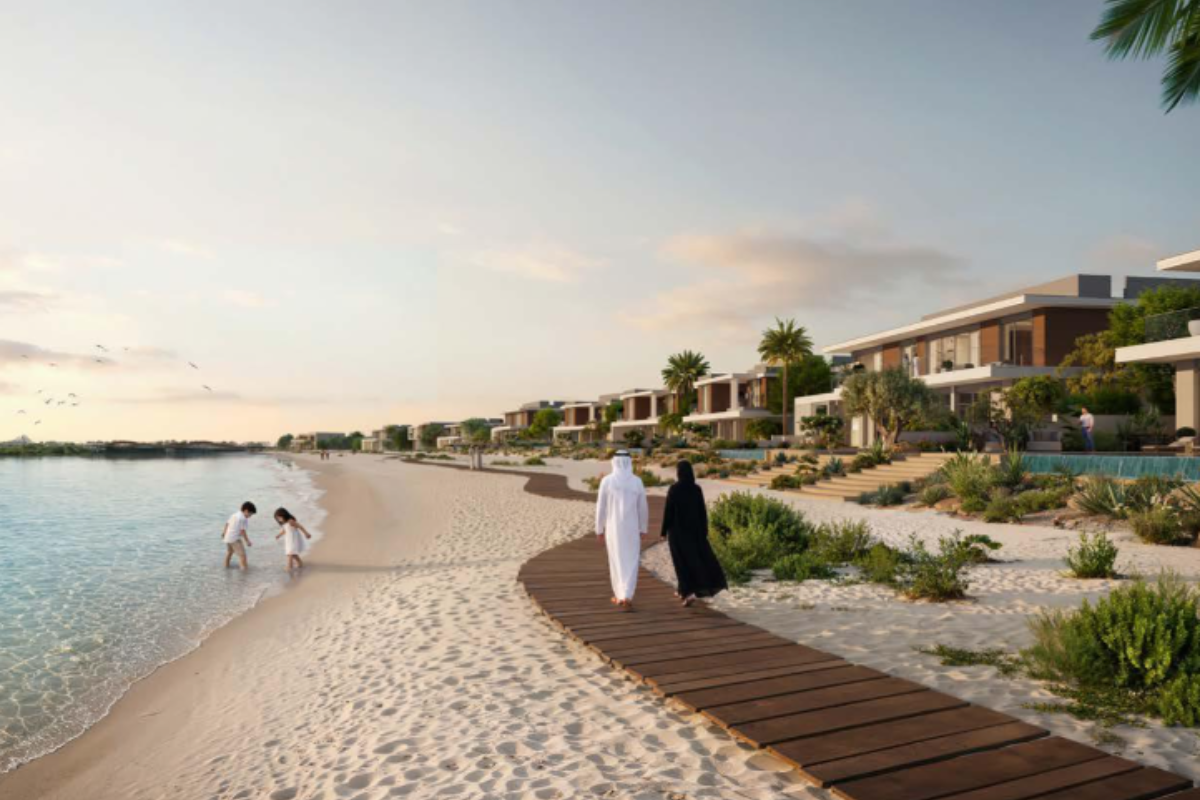
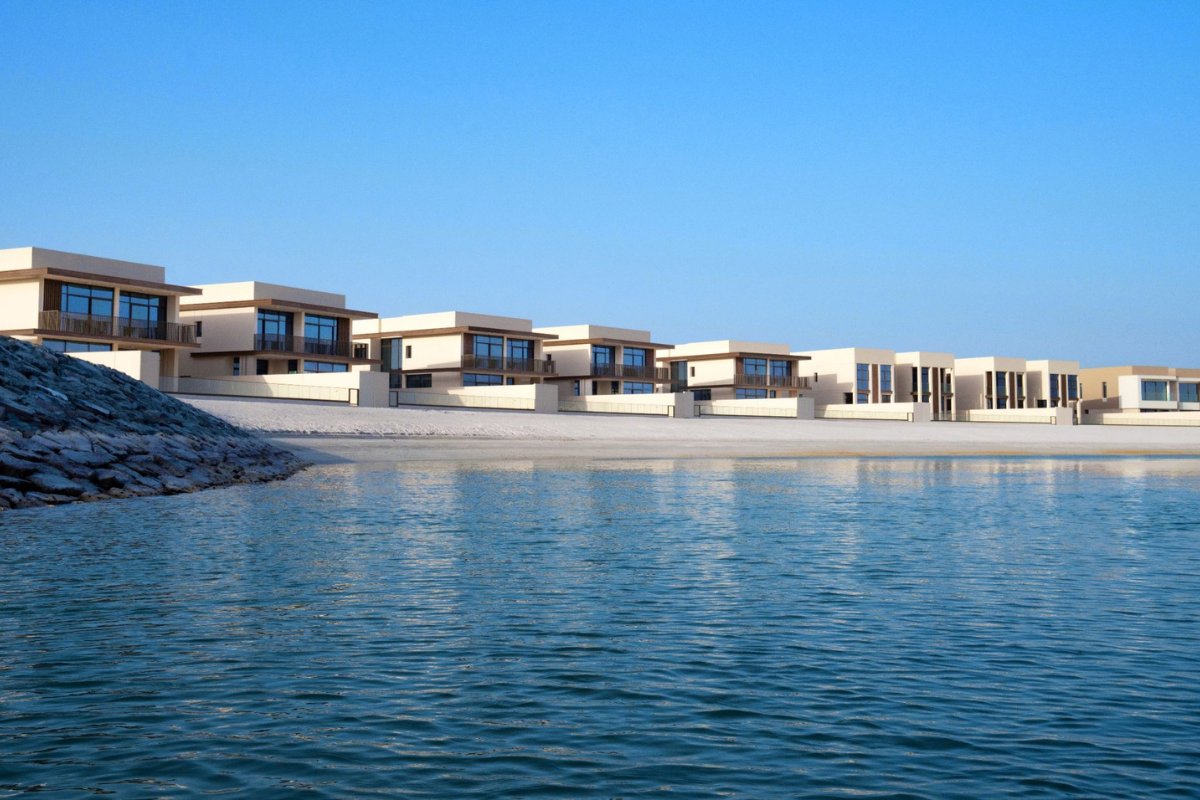
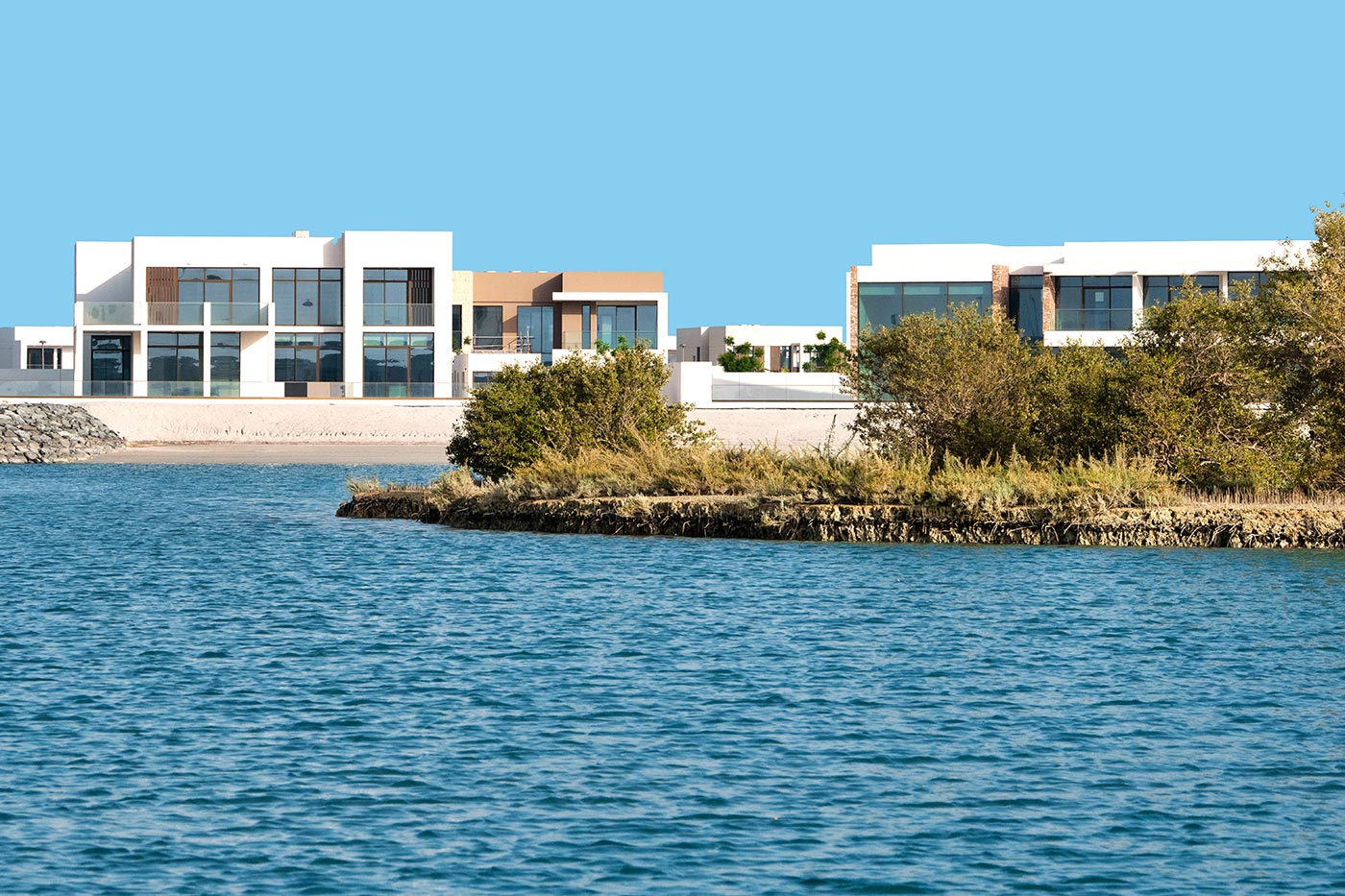
On a waterfront plot, the terrace does one more job. It frames the view, which on a good evening contributes more for the atmosphere than anything you have arranged indoors.
Gardens That Host as Well as They Grow
A garden built for entertaining is planned in rooms, just like the house. A lawn with enough space for a marquee or a children’s afternoon. A pool terrace that people go to rather than walk through. A shaded corner where two guests can escape with their coffee. Lighting and paths that still make sense after dark, which is when the garden is actually used.
Low density planning does the rest. A hosted evening outdoors stays genuinely private when the nearest neighbour is not within earshot.
Water, the Guest of Honour
A waterfront home brings movement and changing light to an evening, and the scenery shifts between courses without anyone arranging it.
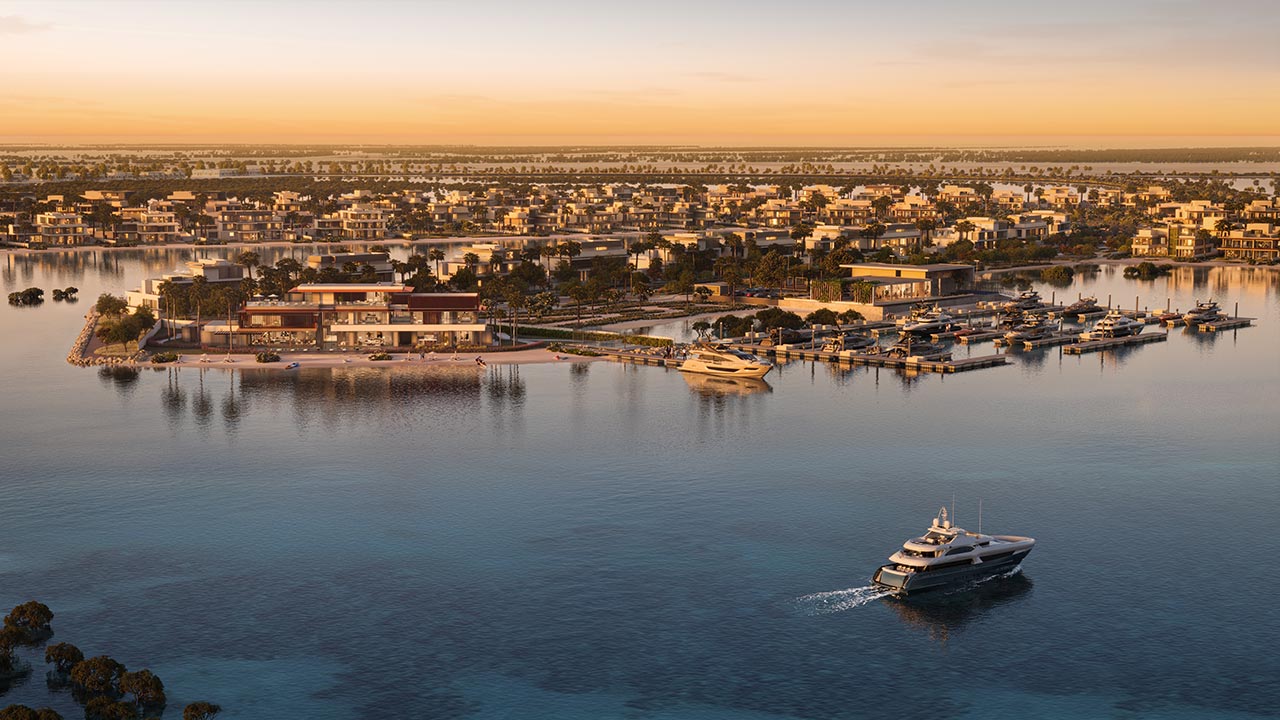
On certain plots the relationship is practical as well as scenic. Where a residence has its own mooring, guests can arrive by boat and the afternoon can continue on the water. Marsa Al Jubail – the marina within Marfaa Al Jubail – adds berths, club facilities, and a concierge team for anyone wanting to host at that scale.
Rooms That Change Register
A house that hosts well accommodates several kinds of evening in one plan, and the region has been solving this for generations. The majlis exists precisely so guests can be received properly while family life continues undisturbed elsewhere.
Contemporary layouts follow the same logic.
A formal dining room for the seated dinner.
An open kitchen and family lounge for the weekend gathering that was meant to be four people.
Guest suites placed for privacy in both directions when the evening becomes a stay.
And a clear separation between the entertaining side of the house and the family’s own rooms, so hosting does not cost the household its retreat.
The larger villas on the island are proportioned for this range.
The service side deserves equal attention: circulation that keeps preparation away from the gathering, cold storage with real capacity, and a kitchen arranged so nobody carrying plates has to cross the room. Guests should only see the results – dishes arriving, glasses refilled, and a host who is present.
When the Evening Outgrows the House
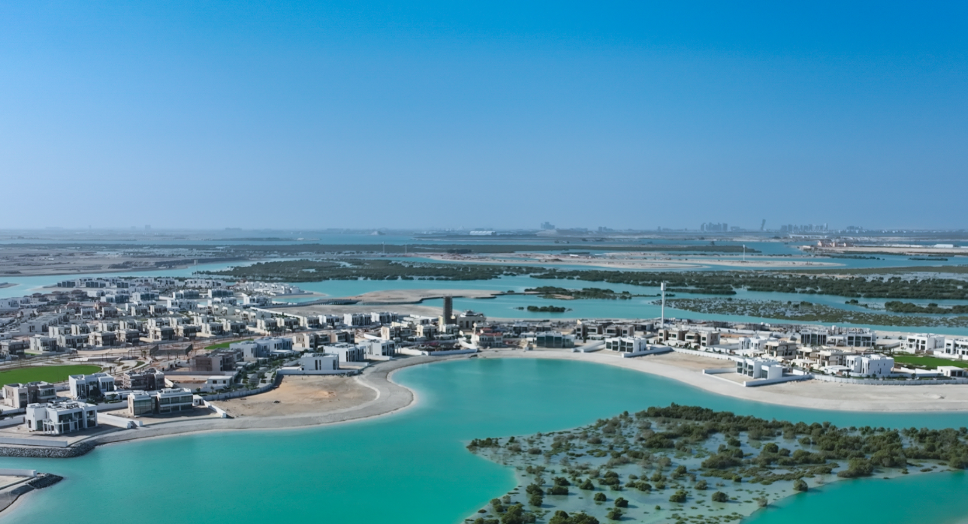
Sometimes the evening outgrows the house, and this is where the wider community matters. The island’s beach club takes daytime gatherings, the marina handles dinners, and Souk Al Jubail – the town centre linking the six villages – offers restaurants and cafés for everything in between.
The practical version: a birthday at the beach club, a business dinner at the marina and a family celebration in the garden can all happen at the same address.
Ease Is the Rarest Amenity

Marble can be bought. Ease has to be designed, and it is the sum of decisions taken long before anyone writes an invitation: the arrival, the circuit, the terrace, the service side, the guest room in the right place.
This is the standard to which the residences of Jubail Island were designed by LEAD Development.
The test is simple. At eleven o’clock, is the host in the room or in the kitchen?